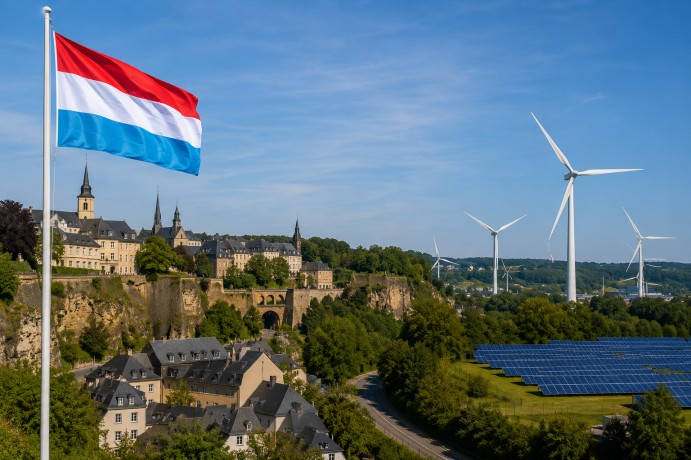
In the latest Eurostat data for 2025, Luxembourg is noted as one of the three least-performing European Union nations in terms of renewable electricity consumption. Despite a general increase in the use of renewable energy across the EU, Luxembourg’s renewable sources accounted for just 20.2% of its gross final energy consumption. Specifically, only 23.3% of the country’s electricity consumption derived from renewables, surpassing only Czechia and Malta within the bloc.
The European Union as a whole has seen significant growth in renewable energy adoption, with renewables comprising 26.2% of gross final energy consumption in 2025, a marked rise from just 9.6% in 2004. The EU has set a target to elevate this figure to 42.5% by the year 2030, underscoring the bloc’s commitment to sustainable energy practices.
Leading the EU in renewable energy usage, Sweden achieved a remarkable 65.4% of its overall energy consumption from renewable sources, setting a high standard for other member states. Finland and Denmark also reported impressive performances in renewable energy consumption, following closely behind Sweden.
Austria stood out prominently in the realm of renewable electricity, with over 90% of its electricity generated from renewable sources, marking it as the top performer in this category within the European Union. This achievement reflects Austria’s dedication to renewable energy and serves as a model for other nations aiming to enhance their renewable energy footprint.