
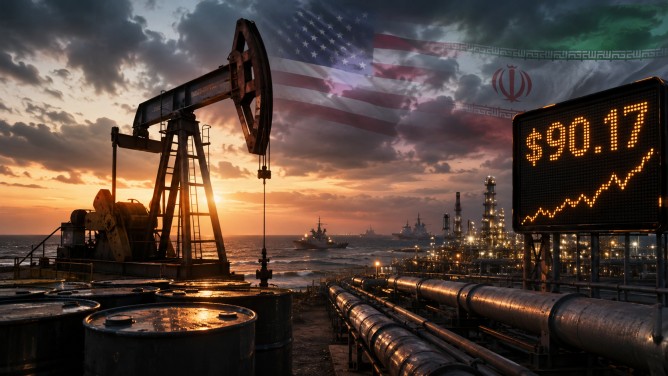
In a significant market development, oil prices have surged following the lapse of a two-month negotiation window between the United States and Iran without reaching a peace agreement. This unresolved tension has sparked concerns about the potential for continued conflict, which could further disrupt global energy supplies. Brent crude prices have climbed above the $90 mark, peaking at approximately $91.63 per barrel, a level not seen since July 30. This rise in oil prices coincides with U.S. President Donald Trump’s demand for Iran to surrender, coupled with his warning that the situation could escalate should diplomatic efforts falter.
The strategic Strait of Hormuz, a vital corridor for global oil shipping, has become a focal point of concern. The passage of commercial vessels through this crucial waterway has declined considerably, fueling fears of extended disruptions in oil supply. The situation is further aggravated by reports of an attack on a cargo vessel navigating through the strait, which has intensified apprehensions regarding the safety of maritime shipping in the region.
Iran has hinted at the possibility of adopting a more assertive military posture if diplomatic negotiations do not yield results. This potential shift in Iran’s stance adds to the uncertainty surrounding the stability of oil supplies, prompting investors to brace for what could be a more protracted interruption. Should the Strait of Hormuz experience a prolonged closure or reduced traffic, it could exert additional upward pressure on crude oil prices.
Analysts are cautioning that the ongoing conflict in the Middle East, when combined with the existing war in Ukraine, could present further challenges for global energy markets. Such a scenario may result in additional shocks, potentially leading to increased oil and gas prices worldwide. The interplay of these geopolitical tensions underscores the fragility of current energy supply chains and the ripple effect they have on global markets.