
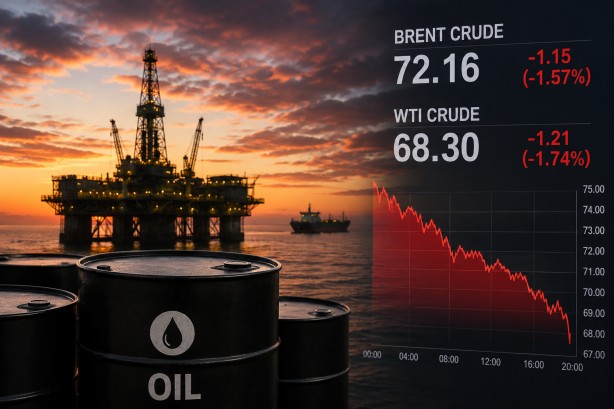
Oil prices experienced a slight dip on Thursday as investors took profits and evaluated the effects of escalating tensions between the United States and Iran. Brent crude saw a decrease of 0.52%, settling at $84.51 per barrel, while the US West Texas Intermediate crude dropped by 0.29% to $79.37 per barrel. Despite these reductions, both benchmarks hovered near their highest levels in a month, having initially extended recent gains.
The market has been influenced by fears of potential supply disruptions following a new series of US military strikes on Iranian targets and Iran’s subsequent threats to curtail energy exports in the region. The Strait of Hormuz, a vital corridor for the global oil and liquefied natural gas trade, has become a focal point for traders. Reports indicate a decline in shipping traffic through this strategic waterway amid the latest rise in hostilities.
Experts have pointed out that ongoing geopolitical tensions are contributing to the sustained elevation of oil prices. Nevertheless, investors remain vigilant, closely observing whether the conflict might result in significant disturbances to energy supply chains. The security of the Bab el-Mandeb Strait, another crucial route for energy transit, has also sparked concerns, particularly regarding the potential involvement of regional allies in the conflict.
Some analysts caution that if tensions continue to mount and export disruptions persist, oil prices could climb further. Conversely, a reduction in hostilities may pave the way for lower prices as the year progresses. The evolving geopolitical landscape remains a critical factor in determining future market movements and energy supply stability.