
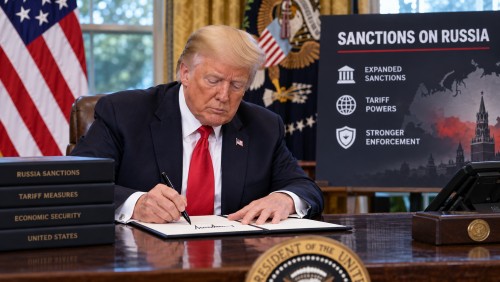
The newly signed legislation enhancing U.S. sanctions against Russia could significantly impact global energy markets and international relations, as it authorizes the imposition of tariffs up to 100% on countries purchasing Russian energy. This development, signed into law by President Donald Trump on September 18, targets nations such as China and India, which are major buyers of Russian oil and gas, contingent on the administration’s execution of these powers.
The legislation not only expands economic measures against Russia but also extends existing sanctions on Iran. The core objectives of the law include disrupting financial networks linked to Russia’s military endeavors and curbing its ability to profit from energy exports, particularly oil and gas. By doing so, the U.S. aims to apply pressure on Moscow amidst ongoing geopolitical tensions.
With bipartisan support, the bill passed through the House of Representatives before reaching the desk of President Trump. The White House emphasized that the legislation fortifies U.S. sanctions and tariff authority regarding Russia, underscoring a continued hardline stance amid deteriorating relations.
One of the pivotal elements of this law is the discretionary power it grants the president. The administration can choose which countries to target with these tariffs, potentially exempting allies or countries deemed cooperative. This flexibility allows for tailored diplomatic engagements, balancing pressure on Russia with maintaining strategic partnerships worldwide.
The ramifications of this law could extend beyond Russia’s borders, influencing global trade patterns and energy markets. As countries weigh their energy procurement strategies, the U.S.’s approach to implementing these sanctions will be closely watched, potentially reshaping alliances and economic ties in the process.